

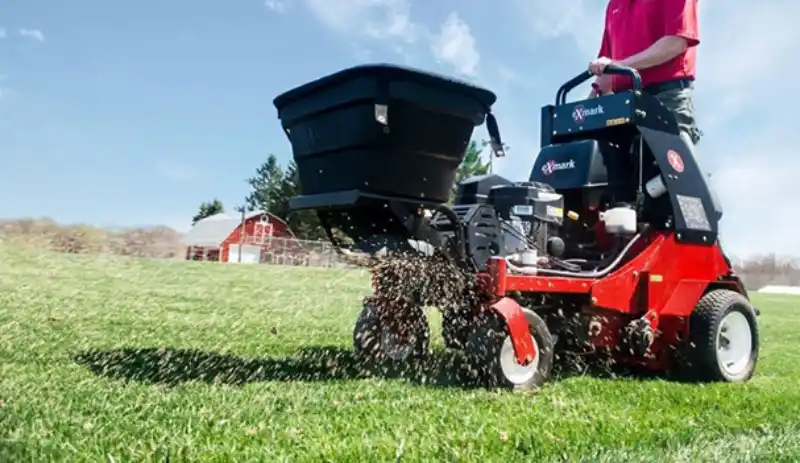
Fall overseeding in Billerica, Massachusetts, repairs thinning turf and fills bare spots before winter. Cut Above Landscaping, Inc. recommends this practice for establishing resilient lawns that withstand cold stress. Professional overseeding, timed with seasonal clean-ups, ensures grass roots develop deeply. Without expert timing, homeowners risk losing their investment to frost damage within a single season.
Key Takeaways
- Fall overseeding in Billerica repairs thinning turf and fills bare spots before winter.
- The optimal window for fall overseeding in Billerica runs from late August through September.
- Core aeration relieves compacted Middlesex County clay soils that choke root development.
- New seed requires immediate moisture with light, frequent watering to keep the seedbed consistently damp.
When is the best time for fall overseeding in Billerica MA?
The optimal window for fall overseeding in Billerica MA runs from late August through September. Soil temperatures remain warm enough for rapid germination while daytime air temperatures cool to the 70-75°F range that cool-season grasses require. Homeowners who miss this window risk seedling failure when soil temperatures drop below 50°F.
Why does late summer work better than spring?
Weed pressure drops sharply by mid-August. Most annual weeds have finished germinating, so new grass seedlings face little competition for water and nutrients. Abundant fall rainfall reduces the need for supplemental irrigation. The combination of warm soil, cool air, and natural moisture creates conditions that UMass Extension research shows can produce germination and seedling survival rates between 50% and 95%, depending on seedbed preparation and follow-up care.
What happens if overseeding is delayed until October?
Success rates decline as soil cools. Early October works in mild years, but seedlings need four to six weeks of growth before the first hard frost. Late-emerging grass enters winter with shallow roots and limited carbohydrate reserves. Winterkill becomes likely. Cut Above Landscaping, Inc. brings 30 years of experience to Billerica properties, timing each project to the specific microclimate and weather patterns of the season. The company’s crews monitor soil temperatures and adjust scheduling to capture the narrow window when germination potential peaks.
How do I prepare my Billerica lawn for overseeding?
Proper lawn preparation determines whether new grass thrives or fails. UMass Extension reports that field germination and seedling survival ranges from 50% to 95%, depending entirely on seedbed conditions and care. Billerica homeowners who skip critical prep steps lose most of that potential before the first seed germinates.
What does core aeration do for compacted Billerica soil?
The process pulls small plugs from the turf, creating channels for seed, water, and nutrients to reach the root zone directly. Without aeration, heavy clay prevents the seed-to-soil contact that drives successful fall overseeding in Billerica MA.
Should I dethatch before spreading seed?
Dethatching removes the layer of dead grass and debris that blocks seed from reaching soil. Clear thatch away, then rake thoroughly. The goal is bare soil contact. Even a thin barrier cuts into the 50% to 95% germination window that UMass Extension documents.
Preparation follows a clear sequence:
- Dethatch the lawn to expose bare soil.
- Core-aerate the entire area, focusing on high-traffic zones.
- Remove all debris, including pulled plugs and dead material.
- Select a cool-season seed blend of Kentucky Bluegrass, Perennial Ryegrass, and Fescues suited to Billerica’s climate.
At Cut Above Landscaping Inc., we specialize in providing comprehensive spring and fall clean-up services that ensure your lawn and garden are prepared for each season’s challenges. The company’s team handles dethatching, aeration, and site clearing so homeowners start with optimal seedbed conditions.
What post-seeding care ensures success before winter?
Successful fall overseeding in Billerica MA depends on precise post-seeding care. Proper watering and mowing practices protect new grass and allow strong root establishment before winter dormancy. Without these steps, homeowners risk losing their investment to frost damage and thin spring turf.
How soon should new seed be watered after fall overseeding?
New seed requires immediate moisture. An initial watering schedule ensures germination before the first frost arrives in Billerica. Light, frequent watering keeps the seedbed consistently damp without causing runoff or pooling. As seedlings emerge, watering shifts to deeper, less frequent sessions that encourage roots to grow downward.
When can a newly overseeded lawn be mowed?
Mowing begins once the new grass reaches roughly 3 to 4 inches in height. The mower blade must be sharp to avoid tearing tender seedlings. Removing no more than one-third of the grass blade at a time protects the young turf and allows it to channel energy into root development. This practice builds resilience before winter sets in.
Cut Above Landscaping, Inc. provides professional turf management services, including turnkey lawn renovation, for Billerica homeowners. The company’s team of 10 professionals brings skill and attention to detail to every job, ensuring high-quality results for fall overseeding projects.
FAQ
When is the best time for fall overseeding in Billerica MA?
The optimal window runs from late August through September, when soil temperatures remain warm and air temperatures cool to the 70-75°F range.
Should I dethatch before spreading seed?
Dethatching removes the layer of dead grass and debris that blocks seed from reaching soil, ensuring bare soil contact for germination.
What grass seed blend works best for Billerica lawns?
A cool-season blend of Kentucky Bluegrass, Perennial Ryegrass, and Fescues suits Billerica’s climate and stands up to the region’s winter conditions.
How soon can a newly overseeded lawn be mowed?
Once the new grass reaches roughly 3 to 4 inches, mow with a sharp blade and remove no more than one-third of the blade length to protect the young roots.
Conclusion
Fall overseeding in Billerica ultimately rewards homeowners who commit to proper timing, thorough soil preparation, and diligent post-seeding care. When executed correctly, this practice establishes deep-rooted grass that withstands winter and returns thicker in spring. Homeowners who follow the late-August through September window, aerate compacted clay, dethatch debris, and maintain consistent moisture protect their investment against frost damage and thin turf.
Ready to give your lawn the fall overseeding it needs before winter sets in? Contact Cut Above Landscaping, Inc. to schedule your seedbed preparation, aeration, and overseeding service in Billerica.