


Sustainable Pond Design: Natural Filtration & Features
An eco-friendly pond combines landscape beauty with environmental stewardship. As sustainable landscaping becomes more common, homeowners want clear guidance on pond design that supports local ecosystems. This article summarizes sustainable water features, natural filtration approaches, and the practical benefits of eco-friendly ponds, and notes how professionals such as Cut Above Landscaping Inc. can assist with planning and installation.
Key Takeaways
- Eco-friendly pond designs support local ecosystems and biodiversity while improving outdoor aesthetics.
- Sustainable features include fish ponds, water gardens, and pondless waterfalls, each suited to different sites.
- Natural filtration—using aquatic plants and biological filters—improves water quality and reduces algae.
- Native aquatic plants increase filtration efficiency and habitat value.
- Eco ponds aid stormwater management, groundwater recharge, and climate resilience.
- Low-maintenance designs pair diverse plantings, biological filtration, and automation to cut upkeep.
- Renewable energy (solar pumps, LED lighting) lowers operating costs and environmental impact.
- Regular monitoring and seasonal care preserve pond health and longevity.
Sustainable Water Features

Sustainable water features enhance landscapes and provide ecological benefits for flora and fauna. Select features based on site constraints and desired functions.
Types of Ponds
Common residential options include:
- Fish Ponds: Habitat for fish with plant-based filtration to help maintain water quality.
- Water Gardens: Plant-focused ponds that support insects and small wildlife while offering visual interest.
- Pondless Waterfalls: Circulating water over a concealed reservoir for the effect of moving water without standing pools.
Each option can be tailored to support biodiversity and create a calming outdoor feature.
Natural Filtration Methods
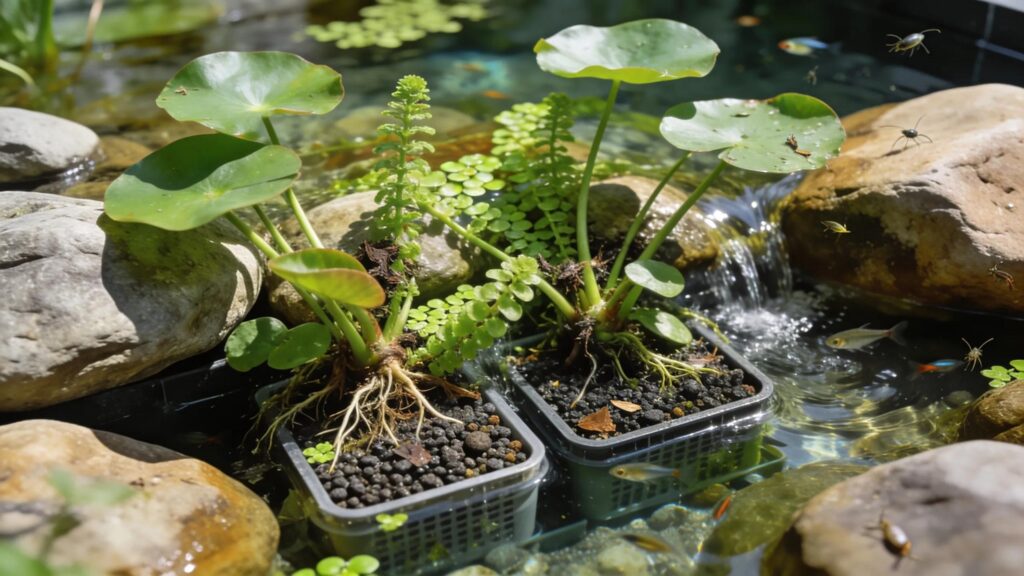
Natural filtration relies on biological processes instead of chemicals. These methods reduce maintenance and promote a balanced pond ecosystem.
Importance of Aquatic Plants
Aquatic plants absorb excess nutrients and contaminants, limiting algae and improving clarity. They also provide habitat and breeding areas for aquatic life.
Benefits of Eco-Friendly Pond Design
Eco-friendly ponds offer practical and aesthetic benefits.
- Aesthetic Appeal: Well-designed ponds enhance outdoor spaces and create a tranquil atmosphere.
- Wildlife Attraction: Ponds provide habitat for birds, amphibians, and beneficial insects.
- Property Value: Thoughtful, sustainable landscaping can increase a property’s appeal.
Professionals such as Cut Above Landscaping Inc. can ensure a pond integrates with local conditions and thrives over time.
Design Options
Good design balances function and form. Work with experienced designers to choose plants, energy-efficient components, and a layout that fits the site.
- Plant Selection: Prioritise native aquatic plants suited to local climate and conditions.
- Energy-efficient Features: Use solar pumps and LED lighting to reduce energy use.
- Customizable Layouts: Shape and placement should integrate with existing landscape and habitat goals.
Environmental Impact
Designed with sustainable practices, ponds support water conservation and local biodiversity.
- Water Conservation: Capture and reuse rainwater to reduce runoff and aid recharge.
- Support for Biodiversity: Provide habitat for a range of species and strengthen local ecosystems.
How Does Biological Pond Design Support Sustainability?
Biological design creates semi-self-regulating systems: native plants and biological filters reduce manual intervention and stabilise water quality through natural processes.
What Features Define Low Maintenance Garden Ponds?
Low-maintenance ponds combine design elements that minimise routine work while preserving ecological function.
- Natural Filtration Systems: Plants and biological media cut cleaning needs and chemical use.
- Diverse Plant Selection: A variety of species promotes balance and resilience.
- Automated Systems: Automatic water level and other controls reduce manual tasks.
Which Natural Pond Filtration Methods Improve Water Quality?
Effective strategies combine vegetation, biological media, and water management.
- Aquatic Vegetation: Species such as cattails and floating plants help absorb nutrients.
- Biological Filters: Media-based filters support beneficial microbes that break down waste.
- Rainwater Harvesting: Collecting rainwater helps maintain levels and reduces freshwater demand.
How Do Native Aquatic Plants Contribute to Pond Filtration?
Native plants are adapted to local conditions, reliably absorb nutrients like phosphorus and nitrogen, and attract pollinators and other wildlife—strengthening ecosystem stability.
What Are the Benefits of Using Natural Filtration Systems in Massachusetts?
Natural filtration suits Massachusetts’ seasonal cycles and local ecosystems and typically requires fewer resources and chemicals than conventional systems. Local landscapers, including Cut Above Landscaping Inc., can apply these approaches effectively.
How Can Environmentally Safe Landscaping Ponds Enhance Local Ecosystems?
Thoughtful, eco-friendly ponds support biodiversity, improve nearby water quality, and contribute to climate resilience through runoff management and cooling effects.
What Wildlife Support Features Should Eco-Friendly Ponds Include?
Design for wildlife access and shelter:
- Aquatic Plants: Provide shelter and food.
- Sheltering Structures: Rocks, logs, or purpose-built shelters offer refuge.
- Gradual Slopes: Gentle shorelines let wildlife enter and exit safely.
How Do Sustainable Water Features Contribute to Climate Resilience?
Properly sized and placed ponds reduce flood risk by managing runoff, aid groundwater recharge, and foster diverse habitats that help ecosystems adapt to change.
What Maintenance Practices Ensure Longevity of Eco-Friendly Ponds?
Regular, focused maintenance keeps ponds healthy and reduces repair risk.
- Regular Monitoring: Check water quality and plant health to catch issues early.
- Seasonal Care: Clean debris and trim plants as seasons dictate.
- Equipment Upkeep: Inspect pumps and filters to ensure reliable operation.
Common Troubleshooting Tips for Sustainable Ponds
Address common problems with targeted measures.
- Algae Blooms: Add plant coverage and reduce nutrient inputs.
- Water Clarity: Improve filtration with plants or biological media.
- Wildlife Issues: Review habitat features and adjust to support declining species.
How Can Renewable Energy Be Integrated into Pond Systems?
Renewables lower operating costs and emissions.
- Solar Pumps: Power circulation with solar arrays where feasible.
- LED Lighting: Use efficient lighting, ideally solar-powered.
- Energy Optimization: Self-regulating controls reduce energy use while keeping systems effective.
Frequently Asked Questions
What role do eco-friendly ponds play in managing stormwater runoff?
Ponds capture and slow rainwater, easing pressure on drains and supporting groundwater recharge; porous materials and plants help filter pollutants before water reaches waterways.
How can I design an eco-friendly pond if I’m limited on space?
Choose compact options such as small water gardens or pondless waterfalls; vertical planting and carefully selected natives boost ecological value in tight footprints.
What maintenance is required for low-maintenance eco-friendly ponds?
Periodic attention is still needed: monitor water quality, remove seasonal debris, and confirm filtration is functioning. A diverse plant palette and some automation reduce routine work.
Can eco-friendly ponds improve the aesthetics of my garden?
Yes—native plantings and natural materials provide seasonal interest, sound, and movement that complement surrounding landscaping.
What types of wildlife can be attracted to eco-friendly ponds?
Birds, frogs, dragonflies, and beneficial insects commonly use ponds that include plants, sheltered areas, and gentle shorelines.
What should I know about the cost of installing an eco-friendly pond?
Costs vary by size, design complexity, and materials. Smaller installations cost less up front; many eco-friendly elements reduce long-term maintenance and energy expenses. Request estimates from local professionals to compare options.
Conclusion
Eco-friendly pond design enhances landscapes while delivering ecological benefits. Natural filtration and native plantings support biodiversity, conserve water, and improve climate resilience. Consult experienced professionals such as Cut Above Landscaping Inc. to create a sustainable water feature tailored to your site and goals.