

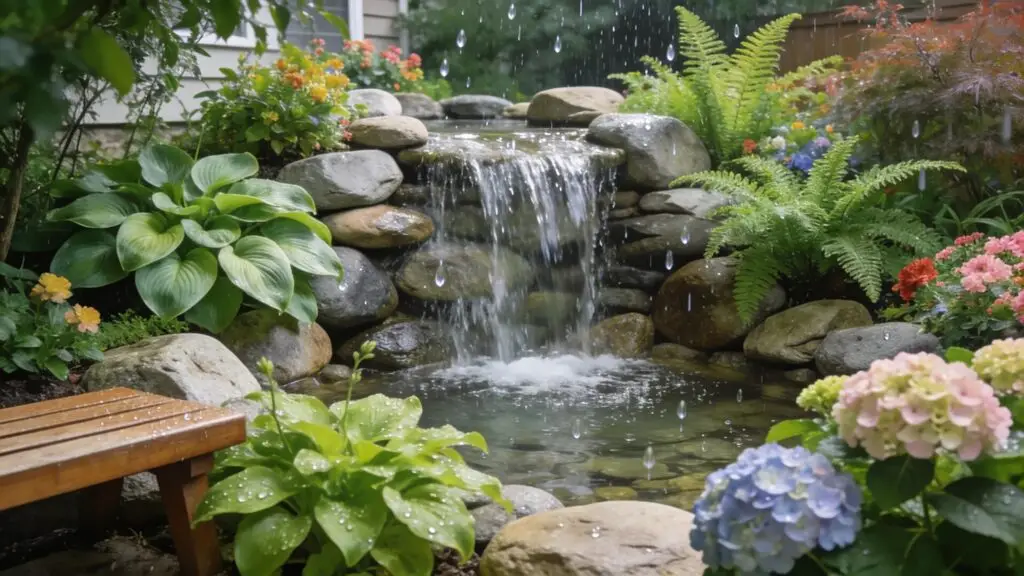
The Benefits of Pondless Waterfalls for Sustainable Landscapes
Pondless waterfall designs offer an attractive, low-water approach to managing garden water. By recirculating water from a hidden reservoir, they provide the sights and sounds of a waterfall while reducing evaporation, maintenance, and overall water use. This article summarizes how pondless waterfalls fit into eco-friendly landscaping and gives practical design and maintenance guidance for homeowners and commercial clients.
We compare pondless and traditional features, highlight conservation and cost benefits, and present design ideas and care practices tailored to sustainable landscapes.
Key Takeaways
- Pondless waterfalls recycle water through a concealed basin, lowering evaporation and conserving resources.
- They need less maintenance than pond-based systems and reduce issues like algae and mosquitoes.
- Pondless designs work well in smaller spaces and varied landscape types.
- Surrounding native plants reduce irrigation needs and support biodiversity.
- Water recycling and efficient pumps cut resource consumption and operating costs.
- Eco-friendly hardscaping and recycled materials complement pondless systems.
- Sustainable lawn care—organic fertilization, targeted irrigation, and mulching—supports these features.
- In Massachusetts, pondless waterfalls add drought resilience, habitat value, and can boost property appeal.
- Installation in MA commonly ranges from $4,000 to $15,000 depending on design and materials.
What Are Pondless Waterfall Designs and Their Role in Sustainable Landscaping?
Pondless waterfalls circulate water from a hidden reservoir so no standing pond is visible. A pump recirculates the same water over stone, reducing loss to evaporation and creating visual and acoustic appeal while keeping water use low.
These features deliver a refined aesthetic and lower a property’s water footprint, making them attractive to homeowners focused on sustainability.
How do pondless waterfalls differ from traditional water features?
Traditional waterfalls usually depend on a visible pond that requires cleaning, water-quality treatment, and wildlife management. Pondless designs eliminate that pond, cutting maintenance and related costs.
- Lower Maintenance: No standing water means fewer algae and mosquito concerns.
- Space Efficiency: Pondless systems fit compact or irregular sites.
- Conservation of Water: Recirculation greatly reduces the need to add fresh water.
For many property owners, the simpler footprint and upkeep make pondless waterfalls a practical choice.
Why are pondless waterfalls considered eco-friendly landscaping solutions?
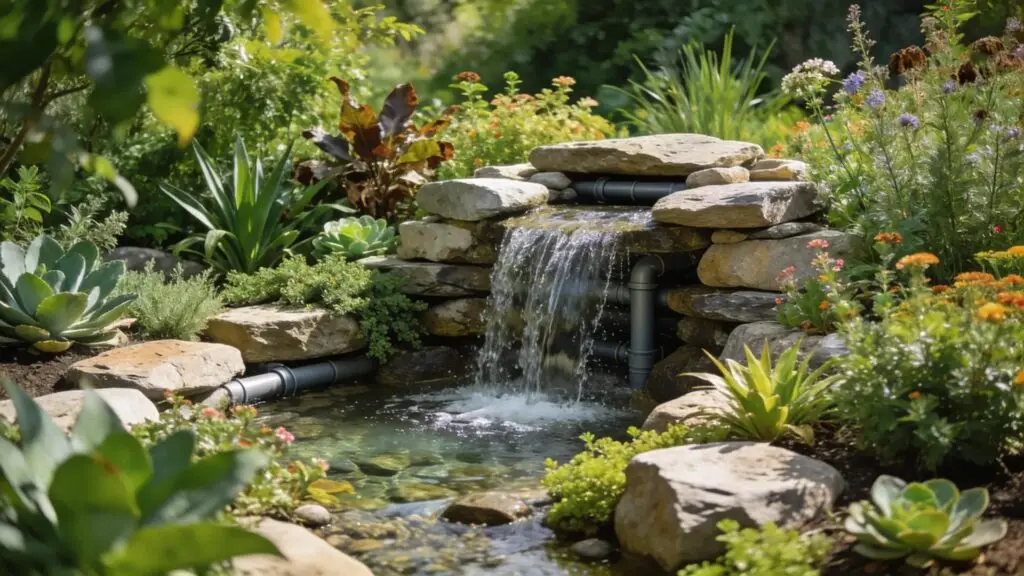
Pondless waterfalls conserve water through recirculation and a concealed basin, an advantage in areas prone to drought. They pair well with native plantings that need less irrigation, and flowing water across stone offers mild filtration benefits for nearby plants and wildlife.
What Are the Key Benefits of Pondless Waterfall Designs for Water Conservation?
Pondless waterfalls reduce water use and simplify maintenance.
- Water Saving Properties: Recycled water minimizes how much must be added over time.
- Reduced Water Usage: A fixed volume of recirculating water limits waste.
- Maintenance Efficiency: Fewer exposed components lower upkeep needs and costs.
These advantages make pondless waterfalls an effective element in sustainable landscape plans.
How does water recycling reduce resource consumption in pondless systems?
Recycling keeps water in continuous circulation via a pump and curbs evaporation losses. Because the system is compact and unobtrusive, it suits many landscape styles and encourages broader adoption of water-saving features.
In what ways do pondless waterfalls lower maintenance and operational costs?
Pondless systems need less routine cleaning and fewer treatments than pond-based features, which cuts labor and repair frequency and tends to lower water bills.
- Lower Labor Costs: Reduced upkeep time translates to savings.
- Reduced Repair Frequency: Fewer exposed components mean fewer breakdowns.
- Water Cost Savings: Recirculation prevents continual refilling costs.
Combined, these factors make pondless waterfalls cost-effective for sustainable water management.
Which Sustainable Landscaping Design Ideas Integrate Pondless Waterfalls Effectively?
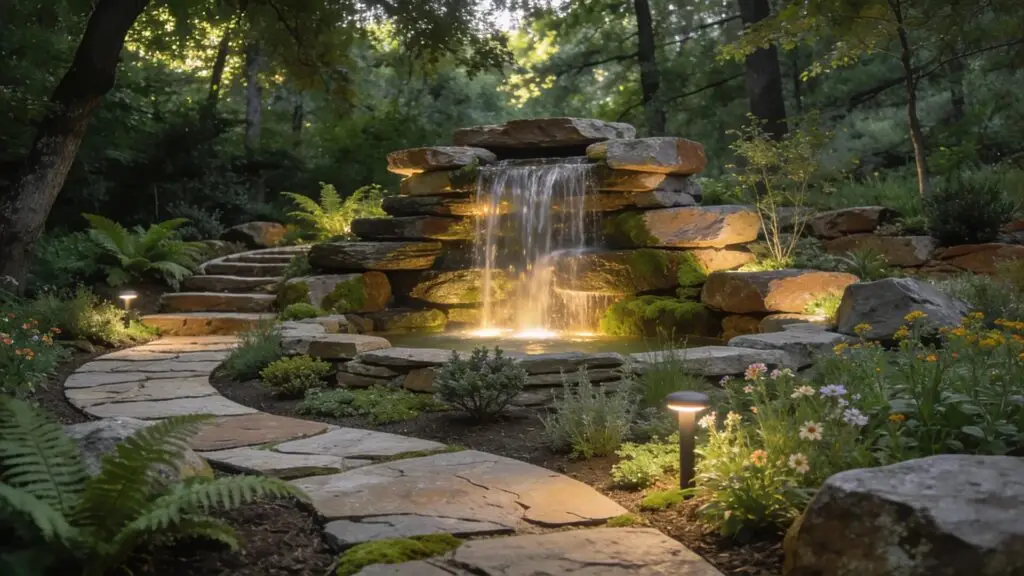
Pondless waterfalls enhance aesthetics and sustainability. Consider these concise design ideas:
- Natural Stone Pathways: Use flat stones to create an organic approach and direct foot traffic.
- Native Plant Incorporation: Choose species adapted to local conditions to cut irrigation needs.
- Eco-Friendly Lighting: Energy-efficient fixtures highlight the feature with low energy use.
These choices balance visual appeal with environmental responsibility.
How can hardscaping and eco-friendly materials complement pondless water features?
Permeable pavers, natural rock, and recycled materials help a pondless waterfall integrate into the landscape while preserving drainage and reducing runoff. Sustainably sourced stone and organic mulches further protect environmental integrity and support wildlife.
What lawn care practices support sustainable landscapes with water features?
Combine pondless features with eco-friendly lawn care for best results. Key strategies include:
- Organic Fertilization: Limits chemical runoff into water systems.
- Irrigation Efficiency: Drip systems and soaker hoses target roots and reduce waste.
- Mulching: Retains moisture and suppresses weeds around the feature.
These practices improve water savings and landscape health over time.
How Can Homeowners and Commercial Clients in Massachusetts Benefit from Pondless Waterfall Installation?
Massachusetts clients gain drought resilience, potential property-value enhancement, and small habitat creation by choosing pondless waterfalls. Local professionals can tailor designs to site conditions and regulatory requirements.
- Drought Resilience: Efficient systems reduce reliance on variable rainfall.
- Enhanced Property Value: Appealing water features can improve curb appeal.
- Natural Habitat Creation: Thoughtful planting around the feature supports wildlife.
What is the typical process and cost of installing pondless waterfalls in MA?
Installation involves site assessment, design planning, and construction. In Massachusetts, costs typically range from $4,000 to $15,000, depending on complexity and materials.
The usual phases are:
- Site Assessment: Determine placement and constraints.
- Design Planning: Finalize materials, flow, and planting plans with a professional.
- Installation: Install reservoir, pump, rockwork, and plantings.
Knowing these steps helps clients budget and plan for a sustainable installation.
Why choose Cut Above Landscaping Inc. for sustainable water feature services?
Cut Above Landscaping Inc. brings experience in eco-friendly installations with customized designs and a client-focused approach. Their team offers tailored solutions that respect site conditions and sustainability goals.
- Expertise and Experience: Skilled teams familiar with sustainable methods.
- Customization Options: Designs tailored to each property.
- Customer-Centric Service: Focused on client satisfaction throughout the project.
Cut Above Landscaping Inc. provides the services to create attractive, sustainable water features that enhance properties.
Frequently Asked Questions
What types of plants should I use around a pondless waterfall?
Use native perennials, grasses, and flowering species suited to your climate; they typically need less water and provide habitat for wildlife.
Can pondless waterfalls attract wildlife?
Yes. The moist microenvironment and nearby plantings attract birds, pollinators, and beneficial insects even without a standing pond.
Are there any restrictions on installing pondless waterfalls in Massachusetts?
Check local regulations and zoning before installing. Some municipalities have requirements or permit processes for water features.
How do I maintain a pondless waterfall?
Maintenance is simpler than for ponds: clean and inspect the pump, clear debris, monitor flow, and perform seasonal checks to prevent freeze damage.
What makes pondless waterfalls an ideal option for small spaces?
They require a smaller footprint and offer flexible placement, delivering the sound and sight of flowing water without a large pond.
Are there energy-efficient options for powering a pondless waterfall?
Yes. Use low-voltage, energy-efficient pumps or solar-powered pumps where sunlight and site conditions allow.
How can I ensure my pondless waterfall has a seamless integration into the landscape?
Evaluate site location, match materials to existing hardscaping, and use native plants and contour-based placement to blend the feature naturally into the landscape.
Conclusion
Pondless waterfalls deliver visual appeal, habitat benefits, and meaningful water savings with lower maintenance than traditional ponds. Work with experienced professionals to design and install a system that fits your property and sustainability goals.